Bombay Batik: Bringing India’s Textile Traditions to Modern Fashion
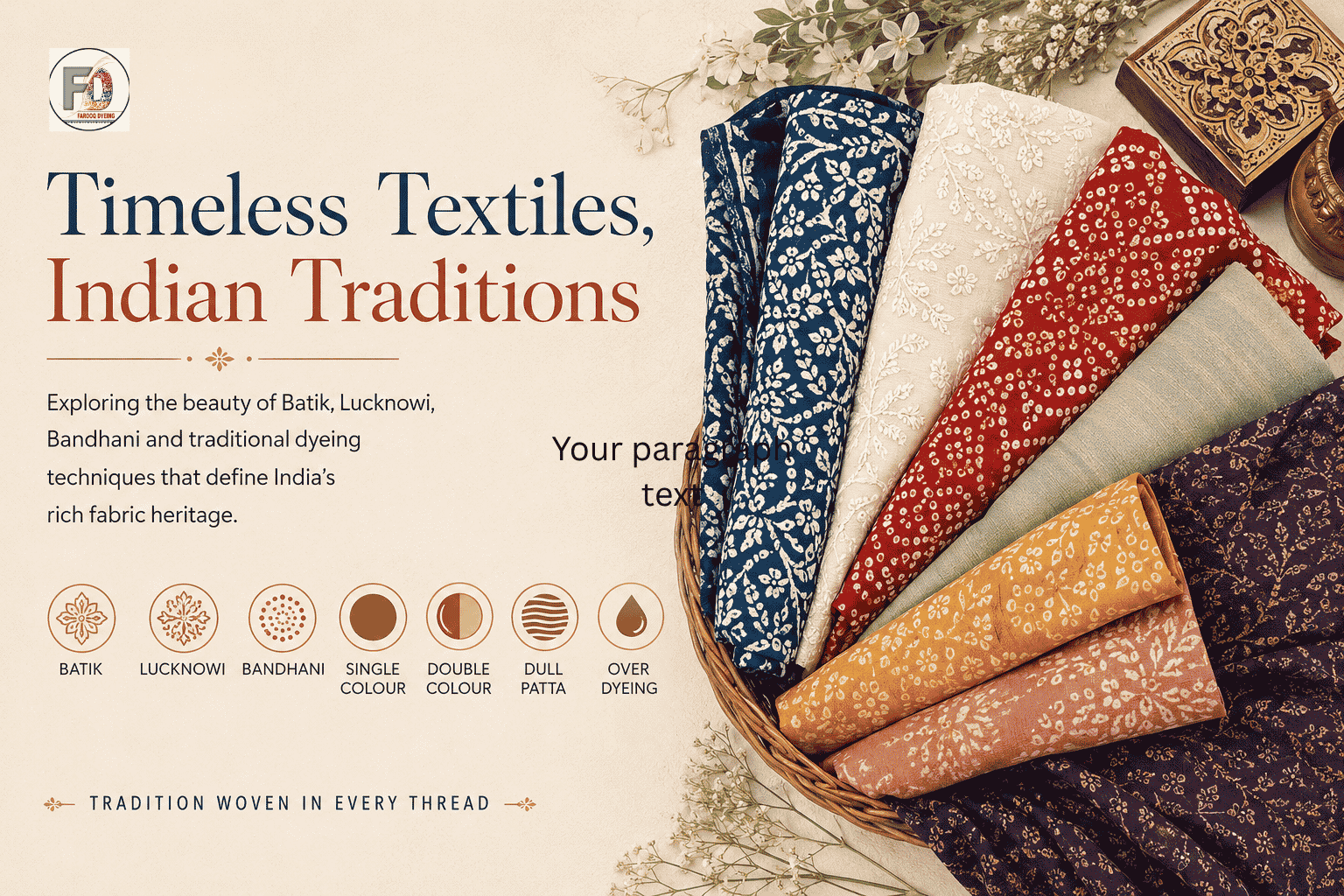
Understanding Batik, Lucknowi & Bandhani: The Timeless Beauty of Indian Fabrics May 8, 2026 India’s textile heritage is a celebration of colours, craftsmanship, and culture. Every fabric tells a story—of artisans, traditions, and timeless beauty passed down through generations. Among the most loved textile arts are Batik, Lucknowi embroidery, Bandhani, and the unique dyeing techniques like single colour, double colour, dull patta, and overdyeing that bring fabrics to life. At Bombay Batik, these traditional crafts are transformed into elegant dress materials that blend heritage with modern fashion. Batik: The Art of Wax and Colour Batik is one of the oldest fabric art techniques, known for its distinctive wax-resist dyeing process. Artisans carefully apply wax on fabric before dyeing it, creating beautiful patterns and artistic effects. Features: Unique handcrafted prints Rich colour combinations Soft and breathable cotton fabrics Traditional yet trendy appeal Modern Appeal: Today, Batik dress materials are loved for daily wear, office wear, festive outfits, and elegant ethnic styling. From subtle single-colour Batik prints to vibrant double-colour designs, every piece reflects artistic craftsmanship. At Bombay Batik, you’ll find beautifully designed Batik cotton dress materials that combine comfort with timeless style. Lucknowi: The Elegance of Embroidery Lucknowi work, also known as Chikankari, comes from the royal city of Lucknow and is famous for its delicate hand embroidery. Features: Intricate threadwork Elegant floral motifs Lightweight and graceful fabrics Soft pastel and sophisticated shades Cultural Value: Lucknowi embroidery represents elegance, royalty, and fine craftsmanship. Its timeless beauty makes it perfect for festive occasions as well as classy everyday fashion. Modern Appeal: Lucknowi dress materials paired with Batik dupattas or Bandhani patterns create a fusion of traditional and contemporary fashion. Bandhani: The Celebration of Colour Bandhani, one of India’s most vibrant textile arts, is created through the tie-and-dye technique where fabric is tied into tiny knots before dyeing. Features: Beautiful dotted patterns Bright festive colours Traditional Gujarati and Rajasthani designs Handmade artistic detailing Cultural Value: Bandhani symbolizes joy, celebration, and tradition. It is commonly worn during weddings, festivals, and special occasions. Modern Appeal: Bandhani dress materials and dupattas are now styled with modern cuts and contemporary fashion trends, making them popular across generations. Understanding the Beauty of Dyeing Techniques Single Colour Dress Material Simple, elegant, and timeless—single-colour dress materials highlight the beauty of fabric texture and craftsmanship. Perfect for minimal yet classy ethnic wear. Double Colour Dress Material Double-colour dyeing creates stunning contrast effects, adding richness and depth to the fabric. These combinations bring vibrancy and uniqueness to every outfit. Dull Patta Dull patta fabrics are loved for their soft, muted tones and subtle elegance. They offer a graceful look ideal for sophisticated styling and everyday comfort. Overdyeing Overdyeing is a creative dyeing process where fabrics are dyed multiple times to achieve layered shades, artistic textures, and rich colour depth. This technique gives every dress material a premium handcrafted appearance. Why Choose Traditional Dress Materials? Cultural Value Traditional fabrics connect us to India’s artistic heritage and preserve generations of craftsmanship. Comfort & Style Cotton Batik and handcrafted fabrics are breathable, lightweight, and perfect for everyday wear. Supporting Artisans Every handcrafted fabric supports skilled artisans and keeps traditional textile arts alive. Experience Tradition with Bombay Batik At Bombay Batik, tradition meets modern fashion through beautifully crafted Batik dress materials, Bandhani collections, Lucknowi designs, and unique dyeing styles. Whether you love elegant single-colour fabrics, vibrant double-colour patterns, graceful dull patta styles, or artistic overdyeing effects, Bombay Batik brings timeless Indian craftsmanship into your wardrobe. Conclusion Batik, Lucknowi, Bandhani, and traditional dyeing techniques are more than just fabrics—they are expressions of India’s rich textile legacy. Every pattern, every colour, and every stitch carries the passion of artisans and the beauty of tradition. So, the next time you wear a Batik dress material, style a Bandhani dupatta, or choose a Lucknowi outfit from Bombay Batik, remember—you are wearing a piece of India’s timeless art.
Posted On: 5/8/2026 Updated On: 5/8/2026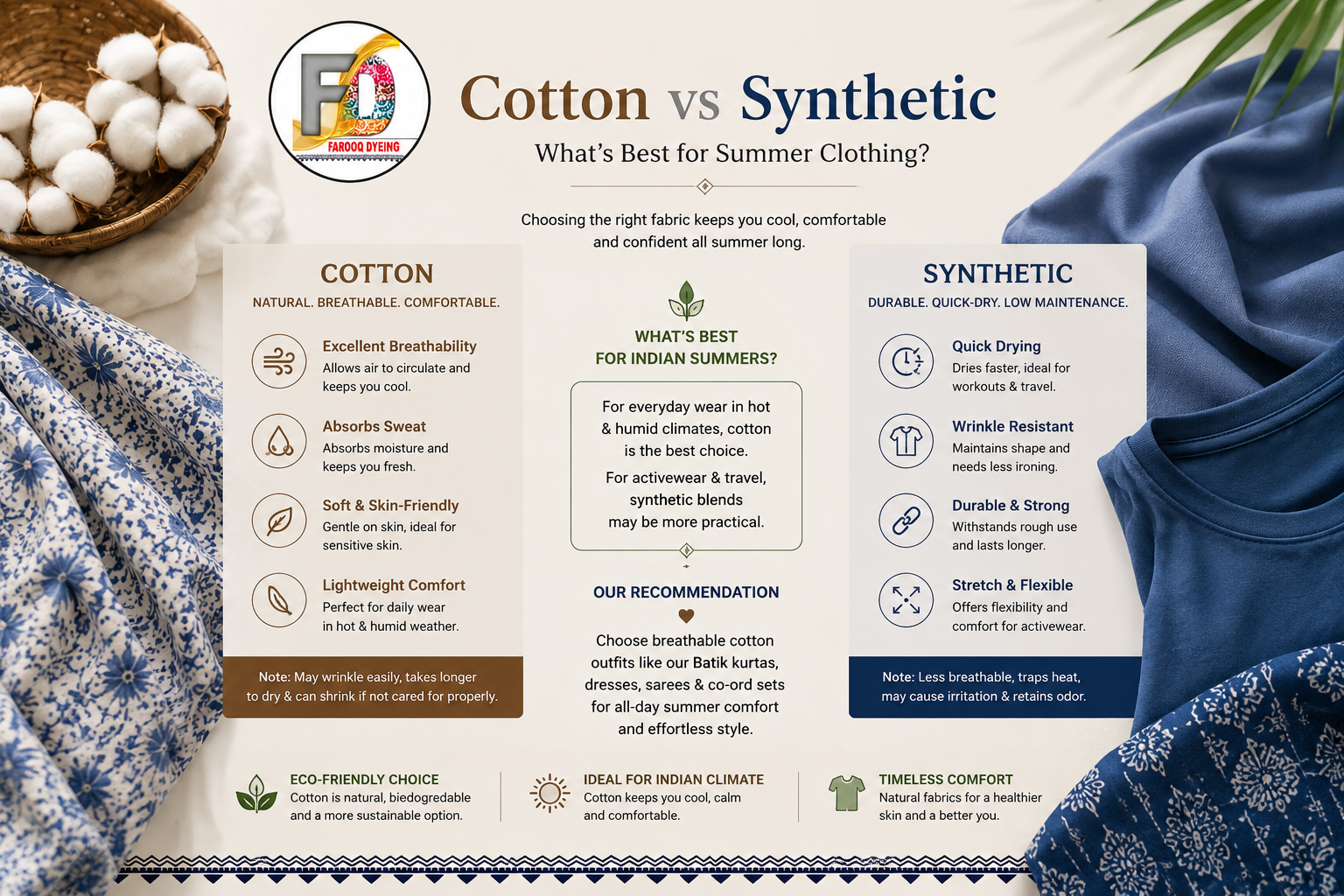
Cotton vs Synthetic Fabrics: What’s Best for Summer Clothing? What Makes Cotton the Most Breathable Fabric for Summer?
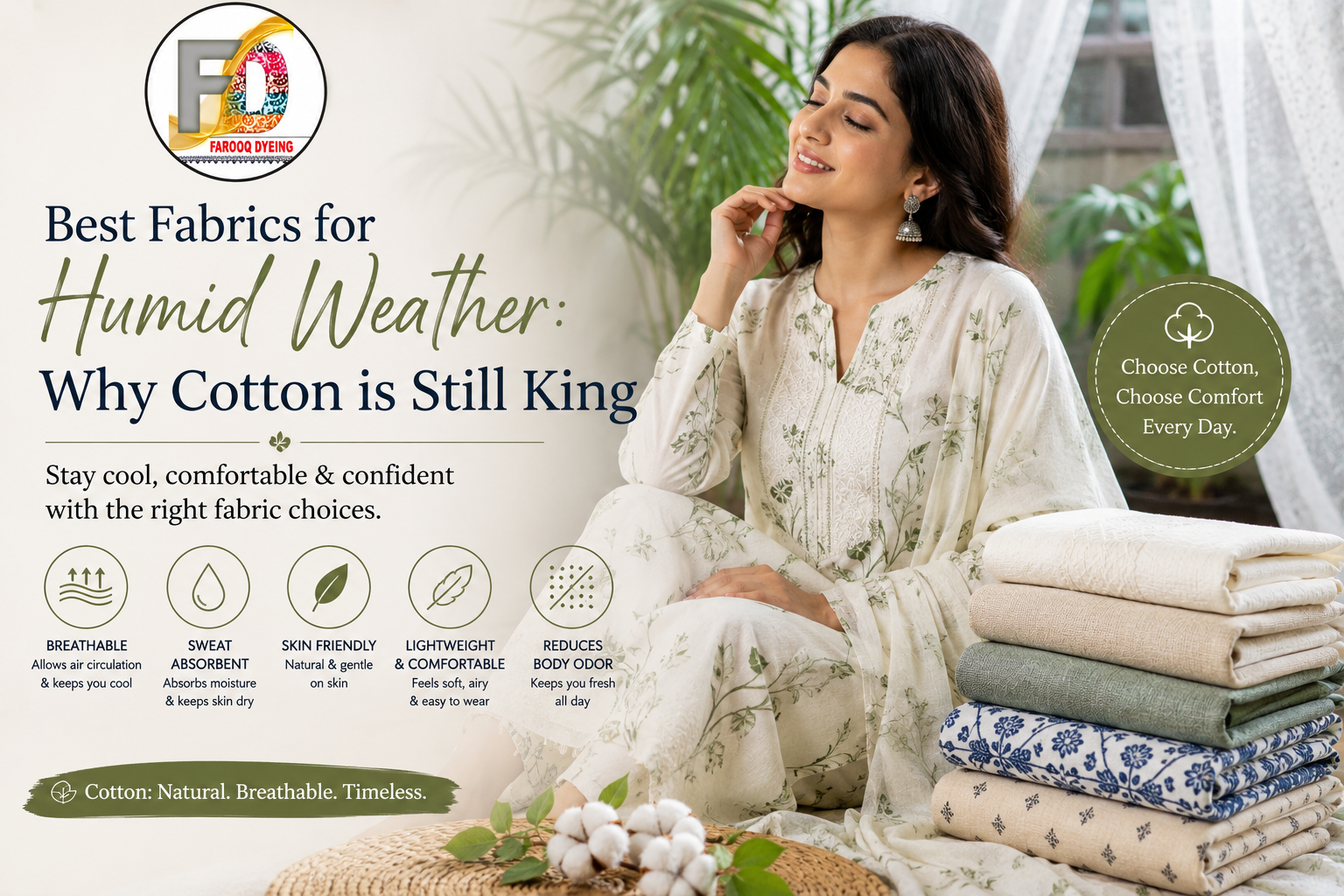
When summer temperatures rise across India—especially in cities like Mumbai, Pune, and Delhi—your choice of fabric becomes just as important as your outfit design. The wrong fabric can leave you feeling sweaty, sticky, and uncomfortable throughout the day. The right fabric keeps you cool, fresh, and comfortable even during intense heat and humidity. At Bombay Batik, we believe comfort and style should go hand in hand. That’s why understanding fabrics is essential when building the perfect summer wardrobe. Why Fabric Choice Matters in Summer During hot weather, your body naturally sweats to cool itself down. The fabric you wear directly affects: Air circulation Sweat absorption Skin comfort Heat retention Overall freshness Two of the most common fabric categories used in summer fashion are cotton and synthetic fabrics. But which one is actually better for Indian summers? Let’s explore. 🌿 Cotton Fabric Cotton is a natural fiber derived from the cotton plant and has been trusted for centuries because of its breathable and skin-friendly properties. At Bombay Batik, many of our handcrafted Batik kurtas, dress materials, sarees, and co-ord sets are made using premium cotton fabrics designed for daily comfort. Why Cotton is Perfect for Summer 1. Excellent Breathability Cotton allows air to circulate freely through the fabric. This ventilation helps release body heat and keeps you cool during hot afternoons. 2. Absorbs Sweat Efficiently Indian summers can be extremely humid. Cotton absorbs sweat naturally, reducing stickiness and discomfort. 3. Soft & Gentle on Skin Natural cotton fibers are ideal for sensitive skin. Unlike synthetic fabrics, cotton is less likely to cause irritation or itching. 4. Lightweight & Comfortable Cotton outfits feel airy and light, making them ideal for: Daily wear Office wear Casual outings Summer travel Festive ethnic wear Drawbacks of Cotton Like every fabric, cotton also has a few limitations: Wrinkles easily May shrink if washed incorrectly Takes longer to dry Can feel heavy when fully soaked Even with these minor drawbacks, cotton remains one of the best fabrics for summer clothing. 🧵 Synthetic Fabrics Synthetic fabrics are man-made materials created using chemical processing. Common examples include: Polyester Nylon Rayon Acrylic These fabrics are widely used in modern fashion, sportswear, and travel clothing. Benefits of Synthetic Fabrics 1. Quick Drying Synthetic fabrics dry much faster than cotton, making them useful for gym wear and travel. 2. Wrinkle Resistant They hold their shape well and require less ironing. 3. Durable Synthetic materials are generally strong and long-lasting. 4. Stretch & Flexibility Many synthetic blends provide flexibility and comfort during physical activity. ❌ Why Synthetic Fabrics Can Feel Uncomfortable in Summer While synthetics offer convenience, they may not always be suitable for extreme heat. Common issues include: Poor breathability Heat trapping Sticky feeling Sweat retention Odor buildup Skin irritation In hot and humid Indian climates, fully synthetic garments often feel warmer and less comfortable for all-day wear. 🌡️ What’s Best for Indian Summers? For daily wear in Indian summers, cotton is usually the clear winner. Breathable cotton fabrics allow airflow, absorb moisture, and help regulate body temperature naturally. This is why cotton is commonly preferred for: Kurtas Sarees Dresses Tunics Co-ord sets Ethnic wear At Bombay Batik, our handcrafted Batik cotton collections are designed specifically for warm-weather comfort while maintaining timeless style. 🌱 What About Cotton Blends? Cotton blends combine cotton with synthetic fibers like polyester. These blends offer: Better durability Reduced wrinkling Faster drying Improved shape retention If you want the softness of cotton with easier maintenance, cotton blends can be a practical middle option. 👗 Which Fabric Should You Choose? Choose Cotton If: ✔ You live in a hot climate ✔ You sweat heavily ✔ You have sensitive skin ✔ You prefer breathable clothing ✔ You want eco-friendly fashion Choose Synthetic Fabrics If: ✔ You need activewear ✔ You travel frequently ✔ You prefer wrinkle-free outfits ✔ You need quick-dry clothing 🌍 Environmental Impact Cotton is biodegradable and renewable, making it a more sustainable option compared to most synthetic materials. Organic cotton is even more environmentally friendly because it uses fewer chemicals during cultivation. Synthetic fabrics, on the other hand: Are petroleum-based Release microplastics during washing Take much longer to decompose For conscious fashion choices, natural fabrics are generally a better long-term option. 💡 Final Verdict When it comes to everyday summer clothing, cotton remains one of the best fabric choices. It offers: Breathability Sweat absorption Skin comfort Lightweight feel Natural cooling Synthetic fabrics are useful for sportswear and travel clothing, but for daily summer comfort—especially in Indian weather—cotton continues to lead. At Bombay Batik, we celebrate breathable fashion through handcrafted Batik cotton wear designed for comfort, elegance, and everyday living. Frequently Asked Questions (FAQs) Q1: Is cotton better than polyester for summer? Yes. Cotton is generally better for summer because it is breathable and absorbs sweat effectively, while polyester can trap heat. Q2: Why do synthetic clothes feel sticky in summer? Synthetic fabrics do not absorb sweat well and often trap body heat, which creates a sticky feeling on the skin. Q3: Are cotton blends good for summer? Yes. Cotton blends offer comfort along with better durability and reduced wrinkling. Q4: Which fabric is best for humid weather? Cotton is considered one of the best fabrics for humid weather because it allows airflow and absorbs moisture naturally. Q5: Why is Batik cotton popular in summer? Batik cotton combines breathable natural fabric with artistic handcrafted designs, making it stylish and comfortable for hot weather.
Posted On: 5/27/2026 Updated On: 5/27/2026